 Skip to content
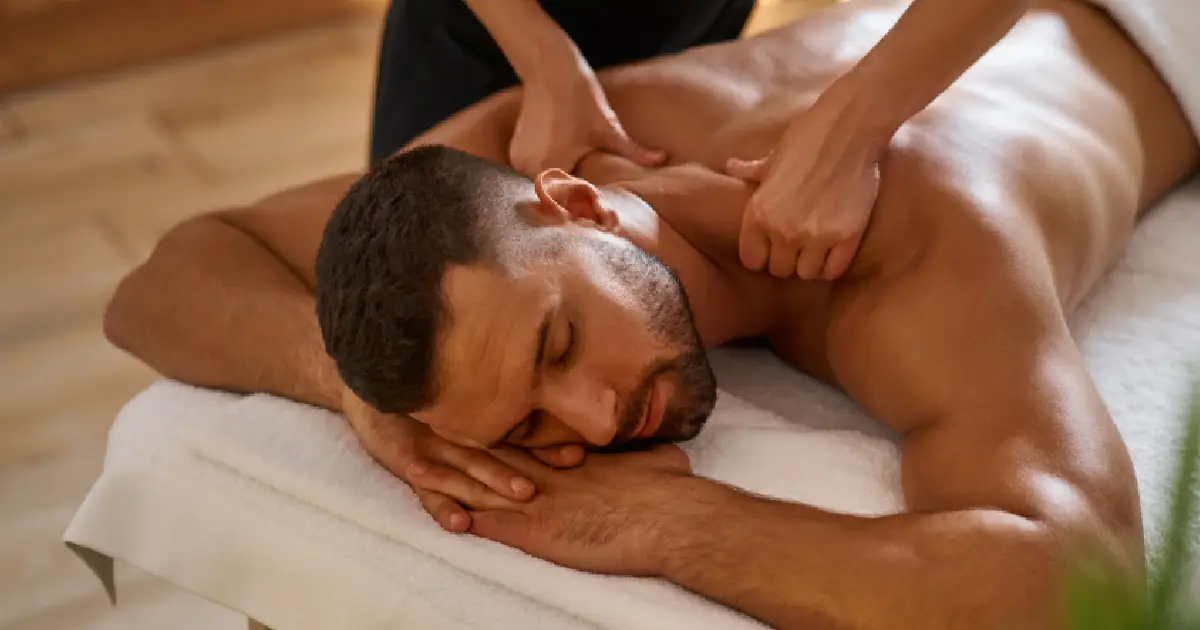



Table of Contents
Something is off. Your shoulder catches on the backswing. Your hamstrings never quite loosen up after a long run. By Thursday, your lower back has locked down. Nothing is torn. Nothing works right either.
That gap is where sports massage does its work. At Equilibrium Lymphatic Therapy in Hollywood, FL, our therapists use hands-on techniques to release restricted muscle tissue and improve circulation through it, which helps soreness settle and restores the range of motion that keeps tightness from becoming strains.
What does sports massage actually help with?
Sports massage does two jobs. Deep tissue work, myofascial release, and trigger point therapy loosen muscle tissue that has stopped moving and push more blood through it, which helps soreness settle. It also keeps your joints moving freely and the muscles around them balanced, which can lower your risk of strains. Clients often notice freer movement right after a session.
What Sports Massage Actually Is
Sports massage therapy is movement-focused bodywork built around restoring mobility that repetitive or abrupt movements have taken away. It is organized around what your body does: the swing, the stride, the lift you repeat hundreds of times a week. Three techniques do most of the work, usually in one session: deep tissue massage, myofascial release, and trigger point therapy.
This is not a relaxation massage. Those work broadly and quiet your nervous system. Sports massage goes after the muscle groups your activity works hardest. And you don’t have to be an athlete. Lift all day, reach overhead, repeat one motion for eight hours, and your muscles are under the same load.
How Sports Massage Works On Muscle Tissue
Sports massage works by applying sustained, directed pressure to tissue that has stopped moving freely. Each technique reaches a different layer.
- Deep tissue massage uses slow, firm pressure to reach the deeper muscle layers, where fibers can stay contracted long after the activity ended.
- Myofascial release addresses fascia, the thin connective sheath around every muscle. Fascia can tighten and limit movement even when the muscle underneath feels fine, which is why stretching alone sometimes changes nothing.
- Trigger point therapy holds steady pressure on small tight bands inside a muscle. Those bands often refer discomfort elsewhere, so a tight spot near your shoulder blade can show up in your arm.
All three lead to the same two things: more blood moving through the treated tissue, and more range of motion when you get off the table.
How It Supports Recovery After Hard Activity
Recovery here means something specific: soreness easing, tension dropping, and movement feeling less restricted in the days after a hard effort. Muscle recovery massage supports that by increasing circulation through the tissue you just worked, which supports your body’s own repair process.
Timing matters. Athletic recovery massage tends to help most a day or two after an event, or at the end of a heavy training block. Many clients notice freer joint movement right after a session, while the muscle soreness relief keeps developing over the next few days.
How much you notice varies with your activity level, sleep, hydration, and how long the tightness has been building.
How It Helps Lower Your Risk Of Injury
Sports injury prevention through massage targets muscle imbalance. Soreness is a separate problem. One group of muscles tightens from overuse, so the joint it crosses starts moving differently to cope, and tissue nearby ends up carrying load it was never built to handle. Do that a few thousand times and something gives.
Regular sessions address tightness while it is still just tightness. Keeping a joint’s range of motion wide and the muscles around it balanced can lower the likelihood of strains, because tissue that moves well tolerates sudden load better than tissue at its limit.
One honest limit: massage supports good mechanics, it does not replace them. Strength work, warm-ups, and rest days still do the heavy lifting. Sports massage keeps your tissue in a state where those work better.
The Muscle Groups That Get The Most Attention
Which areas your therapist focuses on depends on how you move. Three patterns come up most often.
- Rotation and overhead sports such as tennis, golf, and swimming load the shoulders, chest, neck, forearms, and grip. Tight pectoral muscles pull the shoulders forward and limit how much room the joint has, so the chest often gets attention even when the shoulder feels tight.
- Leg-driven activity such as running, cycling, and lower-body training concentrates in the hamstrings, quadriceps, calves, hips, glutes, feet, and ankles. Work around the knee usually means treating the muscles above and below it, since those control the joint.
- Physically demanding work and desk-to-gym schedules show up as back and neck tightness, which is nearly universal.
In every case, the goal is supporting the muscles around a joint so it moves the way it should.
Who It Suits, And Who Should Check With A Provider First
Sports massage suits athletes at any level, fitness enthusiasts, people whose work involves lifting or repetitive motion, and anyone whose range of motion has narrowed.
Some situations call for a medical provider first. If you have acute pain, visible swelling, a fresh injury, or anything sharp and new, get it checked before booking. Once you are cleared, come see us. A few other things are worth mentioning rather than ruling you out: pregnancy, blood thinners, recent surgery, and circulatory conditions.
That intake conversation is where the session gets decided. Your therapist asks what you do, where things feel restricted, and what your week looks like, then sets pressure and pacing.
You Should Not Have To Work Around Your Own Body
Sports massage helps on two fronts. It gives worked tissue better circulation so recovery is less about waiting it out, and it keeps tightness from quietly changing how you move. Neither requires you to be an athlete, only someone whose body works hard.
If something has felt restricted lately, the therapists at Equilibrium Lymphatic Therapy in Hollywood, FL can talk it through and build a session around what your body is asking for. Restore mobility, ease muscle tension, and support faster recovery with sports massage therapy.